
Products.
Our Products
See our complete line of products below.
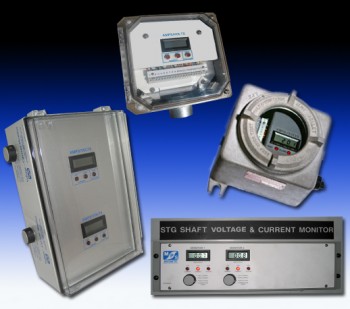
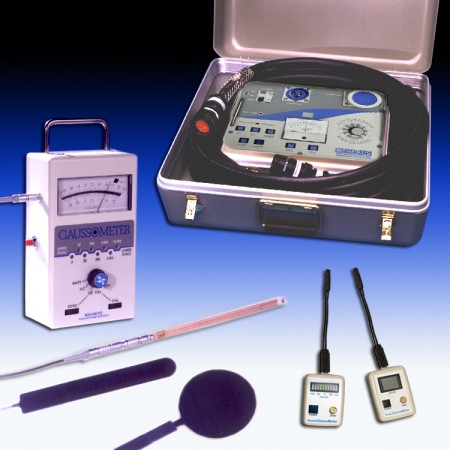
- Safeguarding machinery since 1990
Voltage Current Monitors - FAQs
Will your Voltage-Current monitor work with my existing grounding device?
MPS’ monitors work with most manufacturers’ devices. Engineers are always available to answer any questions you may have regarding this issue.
Which VCM should I use?
For most applications, the VCM-EN is the right choice for continuous monitoring and remote outputs (4-20mA signals) with alarms. Explosion-proof, rack mount and multi-units in a single enclosure are also options. MPS engineers will help guide you to the unit that best suits your needs.
My shaft current always has some brief, sharp current spikes; will the VCM be in alarm all the time?
Generators are known for being particularly noisy. MPS has designed a unit specifically for this reason which looks at the peak of the average current and ignores the transient high currents.
Does the VCM have current and voltage outputs that I can send to my PLC?
Need content for this question.
Auto Degauss - FAQs
How portable is your unit?
The total package, ADG controller unit and cable, weigh in at approximately 54 lbs/24.49 kg. All this is bundled up in a wheeled carrying case for convenience.
Is the Auto Degauss suitable for pipe welding?
Welders are rapidly becoming our largest customer. The ease, reliability and portability of the unit make it ideal for this application.
Can the Auto Degauss system be used on pre-heated pipes (for welding purposes) up to temps of 400°F?
Yes, but with care. The cables need to be kept off the surface by use of either a fire blanket, 2′ x 4′ lumber or other non-metallic material.
What flux levels do I need to achieve to properly weld?
A good rule of thumb is that the magnetic flux level should not exceed 30 gauss when welding. The Auto Degauss system can hold flux levels to 5 gauss or less.
What equipment do I need to degauss/demagnetize?
A gauss meter, such as the MPS Gaussometer, is needed to show magnitude and direction of the magnetic field. The Auto Degauss system is required to effectively eliminate the magnetism by use of its automatic downcycling feature. For Welders: a special Pocket Gauss Meter (PGM-Bar) is available to quickly show if the magnetic field is low enough to weld.
What power is required for the Auto Degauss?
The Auto Degauss is not finicky. Anything from 110-240V, 50 or 60 Hz and 40 Amp single phase will suffice.
How large a pipe diameter can you demagnetize?
Our standard 60′ cable has been used to successfully demagnetize up to 48″ diameter pipes. We do supply 100′ and 120′ cables for larger applications.
Can the Auto Degauss effectively demagnetize high strength alloy steel?
Yes, the down-cycle demagnetizing feature is very effective with any ferromagnetic (magnetically soft) material which includes; iron, steels (carbon, alloy or stainless) and some nickel alloys.
Gaussmeter - FAQs
I already have a dial gauss meter, why should I get yours?
The dial meters are not made for repeatable, rugged use. They easily go out of calibration and are effected by magnetic fields. Our models are rugged enough for most applications and are easily recalibrated by placing the Hall-Effect probe in the zero gauss chamber.
Do I really need a gauss meter to demagnetize?
A gauss meter is needed to show the magnitude and direction of the magnetic field. These are two important parameters in order to determine the strength and direction of the initial demagnetizing field being applied.
Do you have operating instructions available for the Gaussometer?
We sure do, flip over your Gaussometer and you will find a complete set of operating instructions printed on the back label.
I'd like to monitor flux levels during degaussing. How can I be sure that I am not affecting the consistency of the gauss readings by where I hold the probe?
Try taping the probe in place; it can provide useful feedback during the Auto Degauss cycle.
How do I know what model to choose?
You can’t go wrong with any of the MPS Gauss Meters available. But for certain applications, some models are better than others.
For measuring large rotating equipment such as generators, turbines and components, the Gaussometer with the DC Hall Effect probe is a perfect fit for you. This Granddaddy of Gaussometers is our most rugged model with the added ability to measure AC fields (AC probes sold separately).
For the engineer on the move, our Pocket Gaussmeter (PGM-LCD) is the one for you. This meter fits right in your pocket and can measure levels from -1999 to +1999 gauss.
If you simply want to know whether to weld or not to weld…our Pocket Gaussometer (PGM-Bar) has your name on it. This easy to use model lights up green (good to weld), yellow (possibly good to weld) or red (levels too high for welding).
If unsure of the model thats right for you, our engineers are available to help guide you to the one that will best fit your needs.

Location
2135 HWY 35
Holmdel, NJ 07733

Working Hours
8:00 AM - 5:30 PM
Monday - Friday

Phone Number
P: 800-647-7372
F: 732-264-6876